You Won’t Believe What I Found in Vientiane’s Hidden Art Scene
When I first wandered into a quiet alley in Vientiane, I didn’t expect to stumble upon a burst of color and creativity. Laos’ laid-back capital is more than temples and coffee shops—it’s a rising hub of local art and handmade treasures. From handwoven textiles to ceramic studios tucked away in residential streets, I discovered how art shapes the city’s soul. This isn’t mass-produced souvenirs—it’s culture, passion, and craft you can actually feel. What I found wasn’t just beauty in unexpected places, but a quiet resilience, a deep-rooted pride in tradition, and a new generation breathing fresh life into ancient forms. In a world where tourism often flattens culture into clichés, Vientiane offers something rare: authenticity that speaks softly but lingers long after you leave.
The Quiet Pulse of Vientiane’s Artistic Identity
Vientiane may not command the global spotlight like Bangkok or Hanoi, but beneath its unassuming surface beats a creative rhythm that is both subtle and profound. Often overshadowed by more famous Southeast Asian capitals, the city has quietly cultivated a cultural identity rooted in harmony, spirituality, and craftsmanship. Unlike flashier destinations where tourism drives artistic output, Vientiane’s art scene remains deeply personal—intertwined with daily life, family traditions, and community values. Here, creativity is not performed for cameras; it is lived, practiced at home looms, in backyard kilns, and on the walls of quiet neighborhood temples.
What makes Vientiane’s artistic expression unique is the seamless fusion of old and new. Traditional Lao aesthetics—characterized by flowing lines, natural motifs, and symbolic patterns—are being reinterpreted by younger artists who honor their heritage while embracing contemporary forms. You’ll see this in the way a muralist paints a traditional *naga* serpent alongside modern urban imagery, or how a ceramicist uses centuries-old techniques to create minimalist tableware for today’s homes. This blending is not forced or trend-driven; it feels organic, like a conversation between generations where respect flows both ways.
At the heart of this artistic pulse is community. In Laos, art has never been the domain of isolated geniuses. It is a collective endeavor, often passed down through families or nurtured in small cooperatives where knowledge is shared freely. Whether it’s a grandmother teaching her granddaughter to weave a *sinh* or a group of young painters collaborating on a public mural, the emphasis is on connection. This communal spirit protects the integrity of traditional forms while allowing space for innovation. It also makes Vientiane’s art scene remarkably accessible—not locked behind gallery doors, but present in homes, markets, and alleyways, waiting to be discovered by those willing to look beyond the obvious.
Where Tradition Meets Craft: The Story Behind Lao Textiles
Among the most enduring and expressive forms of Lao art is textile weaving, particularly the creation of the *sinh*—a traditional skirt worn by Lao women on ceremonial and everyday occasions. More than just clothing, the *sinh* is a canvas of cultural memory. Each pattern, color, and motif carries meaning: geometric designs may represent rice fields or river currents, while stylized flowers and animals often symbolize prosperity, protection, or spiritual beliefs. The weaving process itself is a meditation, requiring patience, precision, and a deep understanding of both technique and symbolism.
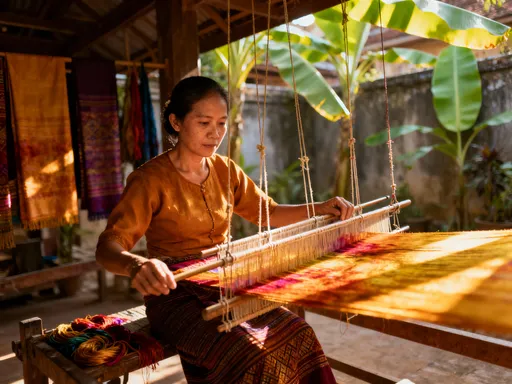
To witness this craft firsthand, I visited a women-led weaving cooperative on the outskirts of Vientiane. Housed in a modest wooden pavilion surrounded by banana trees, the space hummed with quiet concentration. Women sat at wooden looms, their hands moving with practiced ease as they guided threads of silk and cotton. What struck me most was the use of natural dyes—extracted from roots, bark, leaves, and flowers found in the surrounding forests. Indigo from the *khamin* plant, deep red from lac insects, and golden yellow from turmeric created a palette that felt inherently connected to the land. These dyes not only produce rich, lasting colors but also reflect a sustainable approach that has been refined over generations.
The cooperative is more than a workshop; it is a lifeline for many women who have preserved this art form despite economic pressures and shifting fashion trends. In an era when machine-made imitations flood markets, these artisans insist on handcrafting every piece, ensuring that each *sinh* tells a story. Purchasing one is not merely a transaction—it is an act of cultural preservation. When travelers choose authentic, handmade textiles, they support livelihoods, sustain traditions, and carry a piece of Lao heritage into the wider world. The *sinh* is not fading; it is being redefined, worn proudly by younger women who see it not as a relic, but as a living symbol of identity.
Hidden Studios: Finding Artists in Unexpected Corners
Just beyond the well-trodden paths of Vientiane’s tourist districts, tucked into quiet residential lanes and repurposed houses, lie small studios where artists shape clay, carve wood, and paint in solitude. These spaces are not advertised with flashy signs or social media campaigns. They are found by word of mouth, by chance, or by the curious traveler who dares to wander without a map. I discovered one such studio behind a weathered wooden gate, where a potter named Seng was shaping a bowl on a hand-powered wheel. The air was thick with the scent of damp clay, and shelves lined the walls with finished pieces—earthenware vases, delicate cups, and serving dishes glazed in soft, earthy tones.
Seng’s studio is a testament to quiet dedication. He learned ceramics from his father, who learned it from his, tracing a lineage that stretches back decades. Yet he is not bound by tradition alone. While he uses local clay and traditional firing techniques, he experiments with forms that appeal to modern sensibilities—minimalist shapes, asymmetrical designs, and glazes that capture the shifting hues of the Mekong at dusk. His work is sold locally and to a small network of collectors abroad, but he refuses to scale up. “If I make too many,” he said, “I lose the soul of each piece.”
Urban development in Vientiane presents both challenges and opportunities for artists like Seng. As the city expands, rising rents and land pressures push creative spaces to the margins. Some studios have been displaced, forced to relocate or close altogether. Yet this pressure has also sparked resilience. Artists are forming informal collectives, sharing resources and exhibition spaces. Others are adapting by opening their studios to visitors, offering short workshops that allow travelers to experience the craft firsthand. These interactions not only provide supplemental income but also deepen appreciation for the time and skill involved. In this way, art becomes a bridge—not just between past and present, but between locals and visitors.
Art That Tells a Story: Murals, Street Art, and Cultural Narratives
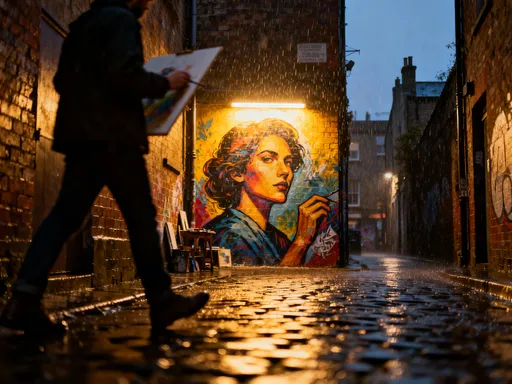
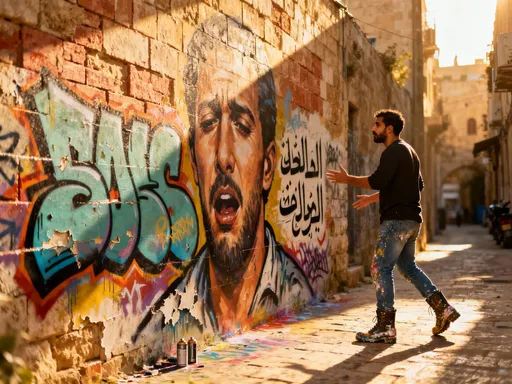
While Vientiane may not be known for its street art in the way that cities like Melbourne or Berlin are, a quiet revolution is unfolding on its walls. Along the riverside promenade, in temple courtyards, and on the sides of community buildings, murals are emerging as a powerful medium for storytelling. These are not random graffiti tags or abstract expressions, but carefully composed works that reflect Lao values, history, and spirituality. Common themes include the reverence for nature, the importance of family, and the enduring presence of Buddhism. One mural I encountered depicted a phoenix rising from lotus flowers—a symbol of renewal and hope—painted by a group of young artists as part of a city beautification project.
What sets Vientiane’s public art apart is its intentionality. Most murals are created with community approval, often in collaboration with monks, elders, or local organizations. They serve not only as decoration but as visual teachings, reinforcing cultural values for younger generations. A common motif is the *naga*, a mythical serpent believed to guard rivers and temples. Seen in many murals, the *naga* connects the spiritual and physical worlds, reminding viewers of the sacredness of the Mekong and the land it nourishes. Other works depict scenes from daily life—farmers tending rice paddies, children playing by the river, or monks receiving alms—celebrating the quiet dignity of ordinary moments.
Behind many of these projects are artist collectives that provide mentorship and materials to young creatives. In a country where formal art education is limited, these groups fill a vital role, nurturing talent and encouraging self-expression. Some collectives partner with international organizations to host workshops or exchange programs, exposing Lao youth to global techniques while emphasizing the importance of cultural authenticity. The result is a new wave of artists who are proud of their roots but unafraid to experiment. Their work is not rebellious in the Western sense, but deeply respectful—seeking to honor tradition while finding space for personal voice. In a city that values harmony over spectacle, their art speaks softly, but with increasing confidence.
Markets with a Soul: Where to Find Authentic Specialty Art Products
For travelers seeking genuine Lao art, the markets of Vientiane offer a rich and rewarding experience—but only if one knows where to look. The most famous, Talat Sao (Morning Market), is a sprawling complex that blends government offices, retail shops, and handicraft stalls. While it can feel overwhelming, with rows of mass-produced souvenirs, careful exploration reveals pockets of authenticity. Look for stalls managed by cooperatives or labeled as “handmade by artisans from Luang Prabang” or “supporting rural weavers.” These vendors often display certificates or photos of the makers, a sign of transparency and ethical sourcing.
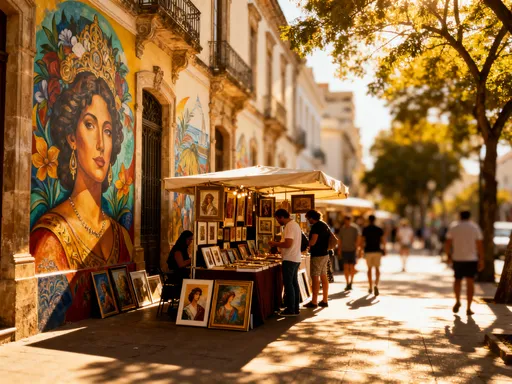
More promising are the weekend craft fairs held near the Mekong waterfront or in cultural centers like the Lao National Tourism Administration grounds. These events are curated to showcase local talent, featuring everything from hand-stamped textiles and silver jewelry to bamboo crafts and herbal paper products. Unlike commercial markets, these fairs often include live demonstrations—watch a weaver at her loom, a potter shaping clay, or a painter applying natural pigments to handmade paper. This immediacy transforms shopping into an immersive experience, allowing visitors to witness the skill behind the object.
Distinguishing authentic handmade goods from imported imitations requires attention to detail. Machine-made textiles often have perfectly uniform patterns and synthetic dyes that lack depth. In contrast, handmade pieces may show slight irregularities—a thread slightly off, a dye gradient that shifts naturally—these are not flaws, but marks of human touch. When in doubt, ask questions: Where was this made? Who made it? How long did it take? Most artisans are happy to share their stories, and these conversations often become the most memorable part of the journey. Bargaining is common, but it should be done respectfully, recognizing the labor and cultural value behind each piece. A fair price supports not just the artist, but the survival of the craft itself.
Beyond Souvenirs: How Travelers Can Meaningfully Engage with Local Art
While purchasing art is one way to support Vientiane’s creative community, deeper engagement offers even greater rewards. A growing number of studios and cooperatives now offer short workshops where visitors can try their hand at weaving, pottery, or natural dyeing. These experiences are not tourist performances; they are genuine invitations into the creative process. I spent an afternoon learning the basics of weaving from a master artisan, my fingers fumbling with the threads as she guided me with patience. By the end, I had created a small strip of fabric—uneven, imperfect, but deeply meaningful. That humble piece now hangs in my home, a reminder of connection and effort.
Such workshops do more than teach skills; they foster mutual respect. When travelers participate in the making, they gain a visceral understanding of the time, knowledge, and care involved. This shifts the relationship from consumer to participant, from observer to learner. It also opens space for dialogue—about culture, daily life, and the challenges artists face. These conversations often reveal shared values: the importance of family, the beauty of simplicity, the desire to preserve something meaningful in a fast-changing world.
With this engagement comes responsibility. Cultural appreciation must be distinguished from appropriation. Wearing a *sinh* or displaying Lao art in your home is not inherently problematic—but it becomes so if done without understanding or respect. Take the time to learn the significance behind the symbols, to credit the makers, and to support ethical sources. Avoid reducing sacred motifs to fashion statements or using religious imagery as decoration. True appreciation means honoring context, not just aesthetics. When done right, travel becomes a form of cultural exchange, where both visitor and host gain something lasting.
Why Vientiane’s Art Scene Matters—And How to Protect It
The quiet beauty of Vientiane’s art scene is not guaranteed to last. As tourism grows, so does the risk of commercialization—of replacing handmade authenticity with mass-produced imitations, of turning sacred symbols into marketable clichés. Some markets already overflow with cheap imports labeled as “Lao handicrafts,” undermining the very artists who sustain these traditions. Without conscious effort, the soul of Vientiane’s creativity could be diluted, its stories lost to profit-driven imitation.
Sustainable tourism offers a path forward. This means choosing experiences that prioritize people over profit, that value process over product, and that respect cultural context. It means supporting cooperatives, visiting independent studios, and participating in ethical workshops. It means asking questions, learning names, and sharing stories—not just of places, but of people. When travelers act as mindful stewards, they help ensure that art remains a living tradition, not a museum exhibit.
Ultimately, Vientiane’s art scene matters because it reflects the heart of Laos: resilient, humble, and deeply connected to land and community. It is art that does not shout, but whispers—inviting you to lean in, to listen, to understand. By seeking out the real creators, by valuing their work, and by carrying their stories with care, travelers do more than take home souvenirs. They become part of a larger story—one of preservation, respect, and shared humanity. In a world that often moves too fast, Vientiane reminds us that some things are worth slowing down for. The next time you walk down a quiet alley, look closely. You might just find more than art. You might find a piece of a culture that’s still breathing, still creating, still alive.