Lost in the Lanes of Muharraq: A Wanderer’s Pulse
Have you ever wandered a city not for its sights, but for the soul it whispers through cracked walls and quiet corners? Muharraq, Bahrain’s historic heart, isn’t about grand monuments—it’s lived in alleyways where incense lingers and seafarers’ tales fade into the breeze. I roamed its districts with no map, just curiosity, and found a rhythm few travelers hear. This is urban wandering at its most intimate. In a world increasingly shaped by curated experiences and digital itineraries, Muharraq offers something rare: the chance to move slowly, to be gently untethered, and to encounter a place not as a checklist but as a living, breathing entity. Here, history isn’t displayed behind glass—it’s embedded in the grain of wooden doors, in the echo of footsteps on coral stone, in the quiet pride of those who call these lanes home.
The Charm of Getting Lost: Why Muharraq Invites Aimless Exploration
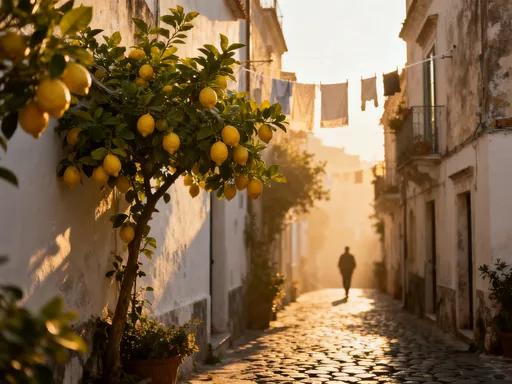
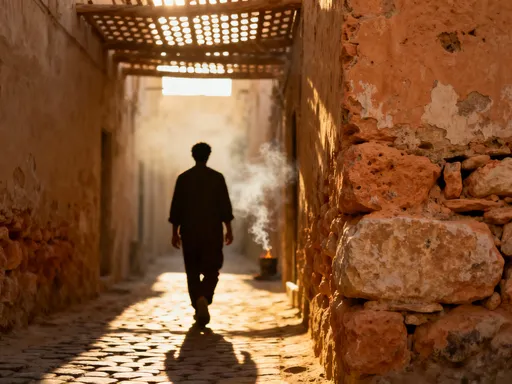
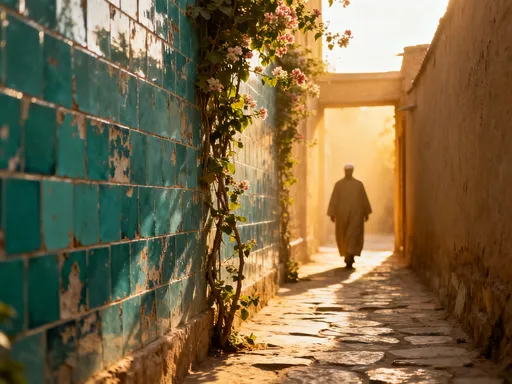
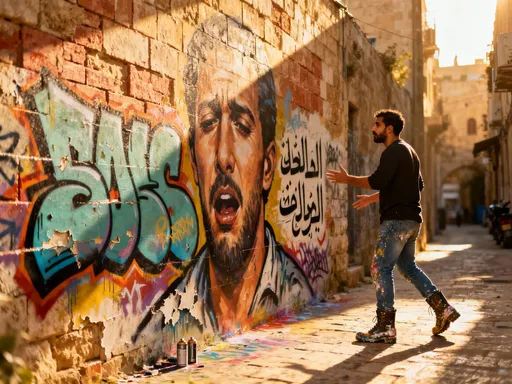
Muharraq defies the logic of modern tourism. There are no wide boulevards, no towering signs directing foot traffic, and certainly no crowded shuttle buses disgorging visitors at timed intervals. Instead, the city unfolds in a mosaic of narrow lanes, some barely wide enough for two people to pass, that twist and turn without obvious pattern. This disorientation is not a flaw—it is the essence of the experience. To wander Muharraq without a fixed destination is to surrender to a slower, more attentive form of travel. It is to notice the way sunlight filters through latticed windows, casting geometric patterns on weathered stone, or how the breeze carries the faint scent of myrrh from an open doorway. These are not attractions; they are moments of quiet communion.
The city’s urban fabric was shaped over centuries by practical needs—shade, ventilation, privacy—not by tourist appeal. Its labyrinthine structure encourages pause and presence. Unlike planned tourist districts designed for efficiency, Muharraq’s alleys were built for life, not performance. There are no souvenir stalls lining every corner, no aggressive vendors, and few overt signs of commercialization. This absence of spectacle allows visitors to engage with the city on a human scale. The rhythm of footsteps, the murmur of conversation from a shaded balcony, the distant clang of a gate—these become the soundtrack of discovery.
Psychologically, such environments have a grounding effect. Research in environmental psychology suggests that low-rise, pedestrian-friendly neighborhoods with organic layouts foster a sense of safety and belonging. The human eye is drawn to detail at eye level—carved wooden beams, hand-forged door knockers, painted shutters—rather than overwhelming scale. In Muharraq, this sensory richness invites mindfulness. The act of getting lost becomes not a source of anxiety but a form of release. Without the pressure to “see everything,” travelers can simply be. And in that stillness, they begin to perceive what guidebooks cannot convey: the pulse of a neighborhood that has endured, adapted, and retained its character against the tide of rapid urbanization.
Al-Muharraq District: Where Heritage Meets Daily Life
At the heart of the city lies Al-Muharraq, a district where history is not preserved behind velvet ropes but lived in real time. Here, restored merchant houses stand shoulder to shoulder with homes still occupied by multi-generational families. The past is not a relic; it is a continuous thread woven into daily routines. Walking through this area, one might pass a beautifully conserved wind tower—one of the traditional barajeel that once cooled homes long before air conditioning—only to see a grandmother hanging laundry from a wrought-iron balcony above. These juxtapositions are not accidental; they reflect a community deeply invested in preserving its heritage without freezing it in time.
Architectural restoration in Al-Muharraq has been guided by a commitment to authenticity. Many of the coral stone buildings, constructed using materials harvested from the sea, have been carefully repaired using traditional techniques. The wind towers, once essential for channeling cool air into living spaces, remain functional in some homes, a testament to the ingenuity of Gulf architecture. Courtyards, often centered around a small fountain or a potted palm, continue to serve as private oases for family gatherings. Thick walls made of coral and lime provide natural insulation, keeping interiors cool during the long, hot summers—a practical feature that remains as relevant today as it was a century ago.
Some of these historic homes have been repurposed as cultural venues, offering visitors a deeper understanding of local life. The Beit Al Quran, though not a residence, exemplifies the city’s reverence for knowledge and tradition. Meanwhile, the restored Saffron House, once a merchant’s home, now hosts exhibitions and workshops that celebrate Bahraini craftsmanship. These spaces are not isolated attractions; they are integrated into the neighborhood, often accessible through the same narrow alleys that lead to family homes. Conversations with local caretakers—individuals dedicated to maintaining these sites—reveal a quiet pride in their work. They speak not of tourism metrics but of legacy, of ensuring that younger generations understand the value of what their ancestors built.
Yet, the district navigates a delicate balance. Urban revitalization, while beneficial, carries the risk of gentrification. In Muharraq, this tension is met with community-led initiatives that prioritize resident well-being over commercial gain. Local councils and heritage groups work together to ensure that restoration projects do not displace families or erase the neighborhood’s social fabric. The result is a district that feels alive, not curated—a place where visitors are guests, not consumers.
Southern Pearling Quarter: Echoes of a Bygone Era
To walk the Southern Pearling Quarter is to step into a world defined by salt, sweat, and silence. This coastal stretch was once the economic lifeblood of Bahrain, where fleets of dhows departed for months-long pearling expeditions across the Gulf. The men who worked these waters—divers, sailors, traders—lived in modest homes along narrow lanes, returning only when the season ended. Today, the area is a UNESCO World Heritage site, recognized not for grandeur but for its profound historical significance. The Pearling Path, a designated trail, guides visitors through a series of preserved buildings, including trading houses, mosques, and docks, each telling a fragment of this maritime story.
The experience of walking this path is deeply tactile. The ground beneath one’s feet is uneven, paved with stones worn smooth by decades of footsteps. Wooden doors, their paint faded by sun and salt, creak open to reveal empty interiors where families once gathered. The air carries the faint briny scent of the nearby sea, mingling with the warmth of sun-baked stone. There are no reenactments, no costumed interpreters—just the quiet presence of the past. Informational panels, installed by the Bahrain Authority for Culture and Antiquities, provide historical context, but the true impact comes from standing in stillness, imagining the lives that unfolded here.
Bahrain’s pearling industry, at its peak in the late 19th and early 20th centuries, was a global enterprise. Pearls from these waters adorned the jewelry of European royalty and Asian nobility. Yet the industry was built on immense human cost. Divers, often working without proper equipment, risked their lives diving to depths of over 30 meters, holding their breath for minutes at a time. The work was grueling, the pay uncertain, and the conditions harsh. The modest mosques along the path were places of solace, where families prayed for the safe return of their men. To visit these spaces today is to witness resilience—a community that thrived despite hardship, bound together by shared labor and faith.
Official heritage programs offer guided walks that deepen understanding, but the most powerful moments are often solitary. Sitting on a stone bench overlooking the tidal flats, listening to the call to prayer echo across the water, one feels the weight of time. The Pearling Path is not a celebration of wealth but a memorial to effort, a reminder that history is made not only by kings and conquerors but by ordinary people whose names may never be recorded. In its quiet dignity, the Southern Quarter offers a rare form of travel: not escape, but connection.
Northern Residential Lanes: The Rhythm of Local Routine
Few tourists venture into the northern lanes of Muharraq, and that is precisely what makes them so revealing. These neighborhoods are not on any official trail, nor are they marked on most maps. They are, simply, where people live. Children play football with a deflated ball, using stacked shoes as goalposts. Women gather at corner shops, exchanging news over cups of tea. An old man sweeps his doorstep with a frayed broom, pausing to nod at passersby. There is no performance here, no expectation of an audience. This is daily life in its unfiltered form—a rhythm that unfolds at its own pace, undisturbed by outside gaze.
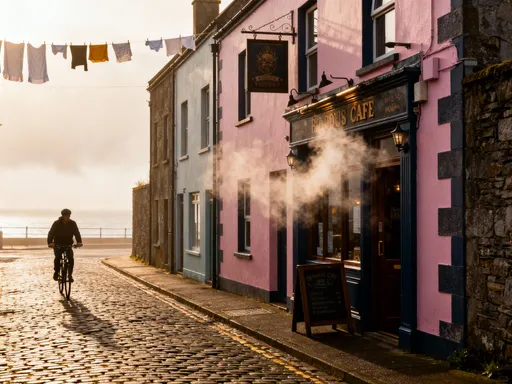
Walking through these lanes requires a different kind of attention. It is not about spotting landmarks but about absorbing atmosphere. The scent of cardamom coffee drifts from open windows. A radio plays quietly from a balcony, the voice of a singer from another era filling the air. Laundry hangs between buildings, fluttering like prayer flags in the breeze. These details, seemingly mundane, are what give the city its texture. They speak of continuity, of routines passed down through generations, of a way of life that values community over convenience.
For visitors, the key is respect. Moving slowly, avoiding intrusive photography, and greeting residents with a simple “Salam alaikum” can open doors—sometimes literally. A smile, a nod, a moment of shared silence can be more meaningful than any formal tour. Some residents may invite a traveler in for tea, not out of obligation but out of genuine hospitality—a cultural value deeply rooted in Gulf traditions. These encounters, though brief, often leave the most lasting impressions.
The urban density of these neighborhoods fosters a strong sense of social cohesion. Homes are built close together, sharing walls and courtyards. Neighbors know one another, look out for one another, celebrate and mourn together. This contrasts sharply with modern housing developments, where privacy often comes at the cost of connection. In Muharraq’s northern lanes, community is not an abstract ideal—it is built into the very structure of daily life. To witness this is to understand that urban design shapes not just how we live, but how we relate to one another.
Hidden Courtyards and Private Spaces: Architecture as Storyteller
One of Muharraq’s most striking features is its inward-facing architecture. Unlike Western homes that open to the street with large windows and front lawns, houses here are designed for privacy and family life. From the outside, many appear unassuming—simple facades with heavy wooden doors. But step through a half-open gate, and one may catch a glimpse of a lush courtyard: a sanctuary of greenery, shaded seating, and the gentle sound of water from a central fountain. These private oases are not just architectural choices; they are expressions of cultural values—modesty, hospitality, and the centrality of family.
The courtyard, or hayat, is the heart of the traditional home. It provides natural cooling, light, and ventilation, making it a practical response to the climate. But it is also a social space—a place where families gather, where guests are received in the majlis, the traditional sitting area. The majlis is more than a room; it is a cultural institution. It is where decisions are made, stories are shared, and relationships are nurtured. Even in modern renovations, this space is preserved, often updated with contemporary furnishings but retaining its essential function.
Woodwork is another defining feature. Intricately carved doors, windows, and ceilings reflect a tradition of craftsmanship that values detail and durability. The patterns—geometric, floral, sometimes calligraphic—are not merely decorative; they carry symbolic meaning, often invoking protection, blessing, or beauty. Some restored homes, such as those included in cultural walking tours, allow visitors to step inside and experience these spaces firsthand. These tours are conducted with care, ensuring that privacy is respected and that the homes are not treated as spectacles.
What emerges is a vision of architecture as narrative. Every element—from the placement of the wind tower to the height of the walls—tells a story about climate, culture, and values. In a world where homes are increasingly standardized, Muharraq’s domestic spaces offer a reminder that buildings can be deeply personal, shaped by generations of lived experience. To understand these homes is to understand the people who built and inhabit them—not through grand gestures, but through the quiet logic of everyday design.
Culinary Wandering: Tastes Found, Not Sought
In Muharraq, food is not an event; it is an extension of daily life. There are no Michelin-starred restaurants, no themed dining experiences. Instead, meals emerge from kitchens, street corners, and family gatherings—simple, nourishing, and deeply rooted in tradition. To eat here is to follow the nose, not the review. A traveler might stumble upon a steaming tray of mutabbaq—a flaky, stuffed pancake—being prepared in a home during a religious festival. Or they might encounter an elderly vendor selling fresh khaimi dates, their honeyed sweetness a gift of the local palm groves.
Local staples reflect the region’s maritime and agricultural heritage. Balaleet, a dish of sweetened vermicelli topped with a savory omelet, is a breakfast favorite, blending sweetness and salt in a way that surprises first-time tasters. Mahyawa, a fermented fish sauce with a rich umami flavor, is used to season simple rice or bread, a reminder of the sea’s enduring influence. Seafood, often grilled over charcoal with nothing more than salt and lemon, is served in modest eateries—family-run spots with plastic chairs and no signage, where the menu is spoken, not printed.
The experience of eating in Muharraq is tied to timing and context. During Ramadan, the neighborhood transforms after sunset. Families gather for iftar, the meal that breaks the daily fast, and the air fills with the scent of spiced rice, grilled meat, and sweet pastries. Streets that were quiet during the day come alive with movement and laughter. After Friday prayers, communal meals are often shared in courtyards or mosques, open to all. These moments are not staged for tourists; they are genuine expressions of community and faith.
For the wandering traveler, culinary discovery is about patience and presence. It is not about ticking off dishes but about engaging with the people who prepare them. A simple question, a shared meal, a moment of gratitude—these are the ingredients of authentic connection. In a world of fast food and instant gratification, Muharraq offers a different pace: one where food is not consumed, but experienced.
Wandering with Respect: Etiquette, Ethics, and Sustainable Curiosity
To walk through Muharraq is a privilege, and with that comes responsibility. Curiosity must be tempered with cultural sensitivity. Dressing modestly—covering shoulders and knees—is not just a recommendation; it is a sign of respect. Avoiding restricted areas, such as private homes or active places of worship during prayer times, ensures that visitors do not intrude on sacred or personal spaces. Photography, especially of people, should only be done with permission. A smile and a gesture can go a long way in seeking consent, and if the answer is no, it should be honored without question.
Travelers can support the community by engaging with local initiatives. Purchasing handicrafts from heritage centers, using community-trained guides, and dining at family-run establishments ensures that tourism benefits residents directly. Avoiding large commercial chains helps preserve the neighborhood’s authenticity. The goal is not to extract experience but to participate in it—mindfully, humbly, and with gratitude.
This approach aligns with the idea of “soft tourism”—a way of traveling that leaves no trace, creates no disruption, and takes nothing that hasn’t been freely given. It is tourism as listening, as observing, as being present. In Muharraq, where history is not performed but lived, this ethos is essential. The city rewards those who move slowly, who speak softly, who seek not to conquer but to connect.
In the end, wandering Muharraq is not about collecting sights or snapping photographs. It is about feeling the weight of a wooden door under your hand, hearing the echo of footsteps in an empty lane, sharing a moment of silence with a resident on a shaded porch. It is about understanding that a place is more than its monuments—it is the sum of its daily rhythms, its quiet gestures, its enduring spirit. To wander here is not to lose your way, but to find something deeper: the pulse of a city that beats not for visitors, but for those who call it home.