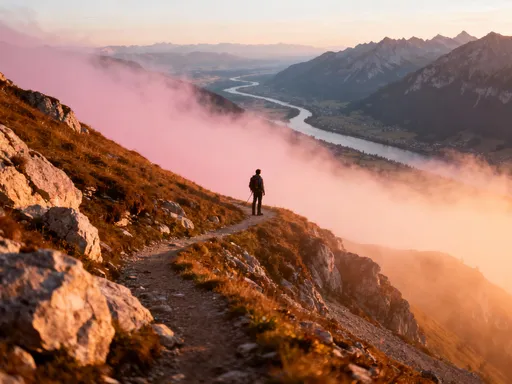
Lost in the Alps: What I Found in Liechtenstein’s Wild Side
Nestled between Switzerland and Austria, Vaduz, Liechtenstein, is more than just a tiny capital with royal vibes—it’s a gateway to untouched alpine beauty. I went looking for quiet trails and fresh air but stumbled upon something far greater: a landscape where nature writes the rhythm of life. From misty mountain paths to sunlit meadows buzzing with life, this hidden gem redefines what it means to truly discover a place. In a world where travel often means crowds, queues, and curated experiences, Liechtenstein offers a rare alternative—authentic, serene, and deeply rooted in the natural world. This is not a destination to check off a list, but one to feel, to breathe in, and to remember.
The Unexpected Allure of a Micro-Nation
Liechtenstein is one of the smallest countries in the world, both in size and population. Covering just over 160 square kilometers and home to fewer than 40,000 people, it’s easy to overlook on a map. Sandwiched between Switzerland to the west and Austria to the east, this doubly landlocked nation often slips beneath the radar of even seasoned travelers. Many know it only for its reputation as a financial center or as a collector’s item for postage stamps. Yet, beyond these narrow perceptions lies a country of dramatic contrasts and quiet majesty.
What makes Liechtenstein truly remarkable is not its economic model or political structure, but its unspoiled natural environment. Despite its size, the country boasts a full range of alpine ecosystems—from river valleys to high mountain peaks. Its commitment to environmental preservation has ensured that development remains low-impact and sustainable. Unlike larger alpine destinations that have been reshaped by mass tourism, Liechtenstein retains an air of authenticity. There are no sprawling resorts, no cable cars cutting across every slope, no overcrowded trails. Instead, there is space, silence, and a deep connection to the land.
Travelers who arrive with preconceived notions are often surprised. The country does not shout for attention. It does not dazzle with grand monuments or bustling cityscapes. Instead, it invites stillness. The first glimpse of the Alps rising behind Vaduz, the capital, sets the tone: this is a place shaped by nature, not by human ambition. For those willing to slow down, Liechtenstein offers a rare kind of discovery—one that unfolds quietly, through mist-covered meadows, the scent of pine, and the distant call of a marmot.
Vaduz as a Starting Point, Not the Destination
Vaduz, perched along the eastern bank of the Rhine River, is a compact and welcoming town that serves as the cultural and administrative heart of Liechtenstein. Its most iconic feature, the Prince’s Castle, sits high on a hill overlooking the town, a symbol of continuity and tradition. The main street, Städtle, is lined with boutiques, cafes, and art galleries, offering a refined but unpretentious atmosphere. Yet, for all its charm, Vaduz is best understood not as an endpoint, but as a threshold.
Within minutes of leaving the town center, paved sidewalks give way to forest trails. The transition is seamless. One moment you’re sipping coffee at a sidewalk cafe, the next you’re walking beneath towering larch trees with the scent of damp earth in the air. This easy access to wilderness is one of Liechtenstein’s greatest strengths. There is no need for long drives or complicated logistics—nature begins at the edge of town.
Public transportation further enhances this accessibility. The country’s efficient bus system connects Vaduz with surrounding villages and trailheads, making car-free exploration not only possible but enjoyable. Buses run regularly, and many hikers use them to create loop routes—walking one way, riding back. Signage is clear, trails are well-maintained, and information is available in multiple languages, ensuring that even first-time visitors can navigate with confidence.
For those seeking a deeper immersion, staying in a guesthouse or family-run inn in one of the nearby villages—such as Triesenberg or Schaan—offers a chance to experience local life. These communities maintain strong cultural identities, with traditional music, crafts, and cuisine still very much alive. From here, the mountains are not just a view—they are a daily presence, shaping routines, seasons, and ways of thinking.
Hiking the Vorberg Trail: A Quiet Path with Big Views
One of the most rewarding ways to experience Liechtenstein’s alpine landscape is by hiking the Vorberg Trail, a moderately challenging route that begins just outside Vaduz. This trail offers a perfect introduction to the country’s natural diversity, combining forested slopes, open meadows, and sweeping panoramas—all within a few hours of walking. What sets it apart is not just the scenery, but the sense of solitude it provides. Even on sunny weekends, the trail remains uncrowded, a rarity in the European Alps.
The journey begins at the base of the Vorberg hill, accessible via a short bus ride or a 30-minute walk from central Vaduz. The initial ascent winds through dense woodland, where sunlight filters through the canopy in golden shafts. Birdsong fills the air—chirps of robins, the tapping of woodpeckers, the occasional whistle of a golden plover. The path is well-marked with yellow hiking signs, and sturdy boots are recommended, especially after rain when the soil can become slick.
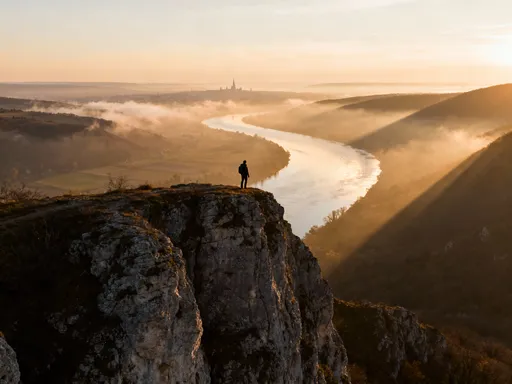
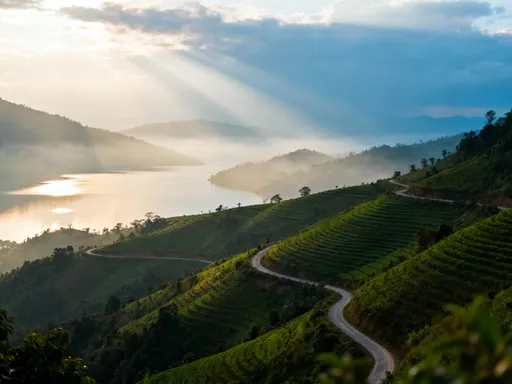
As the trail climbs higher, the trees thin out, revealing views of the Rhine Valley stretching west into Switzerland. On clear days, the Jura Mountains are visible in the distance, their soft blue ridges fading into the horizon. To the east, the higher peaks of the Rätikon range rise sharply, their rocky faces catching the afternoon light. The contrast between the lush valley floor and the rugged alpine heights is striking—a visual reminder of the geological forces that shaped this region.
Near the summit, the terrain opens into grassy clearings dotted with wildflowers—gentians, alpine asters, and the occasional edelweiss, carefully protected by law. Marmots can often be seen sunning themselves on rocky outcrops, their whistles echoing across the slopes. At the highest point, a wooden bench offers a place to rest and absorb the silence. There are no vendors, no crowds, no distractions—just the wind, the sky, and the quiet pulse of the mountains.
The descent can be made via the same route or by connecting to a network of side trails that lead back toward Vaduz or into neighboring villages. Hikers should allow three to four hours for the full loop, carry water, and dress in layers, as temperatures can shift quickly at altitude. Early morning or late afternoon hikes offer the best light and the fewest people, making the experience even more intimate.
The Magic of the Malbun Valley
For a deeper immersion into Liechtenstein’s alpine heart, few places rival the Malbun Valley. Located in the eastern part of the country at an elevation of about 1,600 meters, Malbun is the nation’s primary destination for outdoor recreation. In winter, it transforms into a family-friendly ski area, known for its gentle slopes and welcoming atmosphere. But it is in summer that Malbun reveals its full magic—a valley of emerald meadows, crystal-clear streams, and towering peaks that seem to cradle the sky.
Reaching Malbun from Vaduz takes about 30 minutes by car or bus, winding up a narrow mountain road that clings to the hillsides. As the elevation increases, the air grows cooler and crisper. The landscape shifts from vineyards and orchards to dense conifer forests, then to open alpine terrain. The valley itself is surprisingly spacious, with clusters of wooden chalets, guesthouses, and small restaurants scattered across the greenery. There are no high-rise hotels or artificial attractions—just a community that lives in harmony with its environment.
Hiking in Malbun offers options for all levels. The most popular route leads to the Rotspitz, a peak that rises to 2,084 meters. The trail begins with a gentle climb through larch forests, then follows a ridge with uninterrupted views of the surrounding mountains. Along the way, hikers pass grazing cows with heavy brass bells, their lowing echoing across the valley. In late summer, the slopes are thick with wildflowers, and butterflies flit from bloom to bloom in the warm sun.
For those seeking a more relaxed experience, the valley floor offers flat, well-maintained paths perfect for families. Children can explore shallow streams, search for insects, or watch farmers tend to their fields using traditional methods. Picnic areas are plentiful, and many visitors bring lunches to enjoy beneath the shade of ancient trees. The absence of commercial development allows the natural beauty to take center stage, creating a sense of timelessness.
What makes Malbun truly special is its authenticity. Unlike many alpine resorts that have been commercialized over decades, Malbun remains modest and grounded. The focus is not on luxury or spectacle, but on access to nature and community well-being. Local guides offer educational walks on alpine ecology, teaching visitors about plant identification, animal tracks, and sustainable land use. These experiences deepen the connection between people and place, turning a simple hike into a meaningful encounter.
Rhine River Walks: Where Nature Meets Calm
While the mountains dominate much of Liechtenstein’s landscape, the Rhine River shapes its western border and offers a contrasting yet equally compelling experience. The river forms a natural boundary between Liechtenstein and Switzerland, flowing with a quiet strength through the valley. Along its banks, a network of flat, well-paved trails invites leisurely walks, bike rides, and moments of contemplation.
The Rhine Trail, which runs from the northern town of Bendern to the southern edge near Balzers, is ideal for families, older adults, and anyone seeking a peaceful escape. The path is mostly level, shaded in parts by willow and alder trees, and lined with interpretive signs that explain the local flora, birdlife, and conservation efforts. Kingfishers dart above the water, their bright blue feathers flashing in the sun. Herons stand motionless in the shallows, waiting to strike. In spring, the air is filled with the chirping of warblers and the rustling of reeds.
One of the most scenic stretches is near the village of Nendeln, where the river widens and forms small wetlands. Wooden boardwalks extend over marshy areas, allowing close observation of frogs, dragonflies, and aquatic plants. Benches are placed at regular intervals, encouraging pauses and reflection. The sound of flowing water, the rustle of leaves, and the distant hum of village life create a soothing background—ideal for unwinding after a day of hiking.
The trail also connects seamlessly with Swiss walking paths, allowing for longer excursions into neighboring cantons. Many hikers plan cross-border routes, using public ferries or bridges to return. This integration reflects a broader regional commitment to sustainable mobility and environmental protection. The Rhine floodplains are protected habitats, home to rare species and vital for flood control. Walking here is not just recreation—it’s a lesson in coexistence with nature.
Seasonal changes bring new dimensions to the experience. In autumn, the trees along the river turn golden and crimson, their reflections shimmering on the water’s surface. Winter brings frost-covered reeds and the occasional sighting of deer tracks in the snow. Even in rain, the trail has its charm—the mist rising from the river, the earthy scent of wet bark, the quiet rhythm of drops on leaves. There is a meditative quality to these walks, a reminder that beauty does not always require drama.
Flora, Fauna, and the Pulse of the Alps
Liechtenstein’s compact size belies its ecological richness. Despite covering a tiny fraction of the Alps, the country hosts a remarkable variety of plant and animal life. This biodiversity is supported by a network of protected areas, including the Liechtenstein Nature Park, which covers nearly half the country. These zones are managed with a focus on conservation, sustainable agriculture, and scientific monitoring, ensuring that development does not come at the expense of nature.
Alpine flora is one of the most striking features of the landscape. Above the tree line, hardy plants have adapted to extreme conditions—short growing seasons, strong winds, and intense sunlight. Edelweiss, though rare and legally protected, can still be found in remote rocky areas. Its woolly white flowers, once symbols of daring and romance, are now emblems of resilience. Other species, like the alpine aster and mountain avens, bloom in vibrant purples and yellows, painting the slopes with color during July and August.
Animal life is equally diverse. Marmots are among the most visible residents, often seen standing upright on rocks, scanning for predators. Their whistles serve as natural alarms, echoing across the meadows. While ibex are not native to Liechtenstein, they can occasionally be spotted in nearby regions of Switzerland and Austria, thanks to successful reintroduction programs. Chamois, agile goat-antelopes, are more common and can be seen navigating steep cliffs with astonishing balance.
Birds of prey, such as golden eagles and peregrine falcons, soar above the high peaks, their shadows gliding over the rocks. In the forests, black woodpeckers and nutcrackers add to the soundscape. Even the smallest creatures play vital roles—bees pollinate wildflowers, beetles decompose wood, and earthworms enrich the soil. Every organism, no matter how small, contributes to the balance of this fragile ecosystem.
Conservation efforts are supported by both government policy and public awareness. Environmental education is part of the school curriculum, and many families participate in citizen science projects, such as bird counts or plant monitoring. Trails are designed to minimize erosion, and visitors are encouraged to stay on marked paths, avoid picking flowers, and carry out all waste. These practices reflect a deep respect for nature—one that is not imposed, but cultivated over generations.
Why This Tiny Place Leaves a Giant Impression
Liechtenstein may be small, but its impact on those who visit its natural spaces is anything but. In a world that often equates value with size, speed, or spectacle, this alpine nation offers a different lesson: that meaning can be found in stillness, in simplicity, in the quiet unfolding of a single wildflower on a rocky ledge. The trails here do not lead to grand vistas alone—they lead inward, toward reflection, presence, and reconnection.
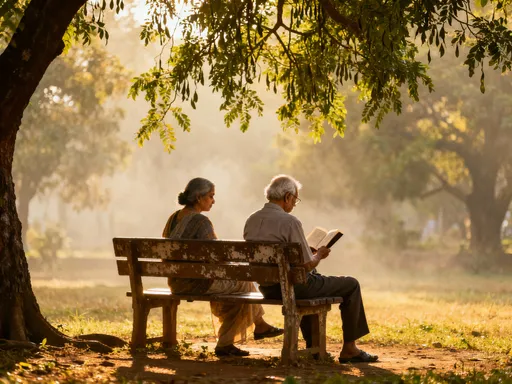
What makes Liechtenstein unique is not just its scenery, but the way it invites a slower, more intentional form of travel. There are no timed tours, no ticketed attractions, no pressure to see everything. Instead, there is space to breathe, to listen, to notice. A mother and child crouching to examine a ladybug. An elderly couple pausing to share a thermos of tea on a bench overlooking the valley. A solo hiker sitting in silence, watching clouds drift over the peaks. These moments, unscripted and unhurried, are the true treasures of the journey.
The country also challenges assumptions about what a destination must be. It is not famous, not flashy, not crowded. Yet it is deeply fulfilling. It reminds us that wonder does not require extravagance—that beauty exists in the ordinary, the overlooked, the quietly enduring. In choosing to protect its landscapes so carefully, Liechtenstein offers a model of stewardship, showing how even the smallest nations can make a lasting difference.
For the traveler seeking authenticity, peace, and a genuine connection to nature, Liechtenstein is not a detour—it is a destination. It asks not to be conquered, but to be experienced with respect and openness. It rewards those who come not to take, but to receive. And in return, it offers something rare: the chance to remember what it feels like to be truly present, to stand in the mountains and hear nothing but the wind, the earth, and the quiet rhythm of one’s own breath. In that stillness, we find not escape, but renewal.