You Won’t Believe What I Found in Edinburgh’s Hidden Corners
Edinburgh isn’t just castles and cobbled streets—it’s a city that hides its wonders in plain sight. I went looking for something different and stumbled upon architectural gems I never expected. From twisted spires to underground vaults, the city’s skyline tells stories far beyond its famous silhouette. This is not your typical tourist trail. What I discovered reshaped how I see urban design, history, and the soul of a place. Let’s explore together.
First Glimpse: A City That Defies Expectations
Arriving in Edinburgh on a misty autumn morning, the city greeted me with a quiet solemnity. The sky hung low, draped in soft gray, casting a muted light over the stone buildings that seemed to rise organically from the volcanic ridge beneath them. At first glance, the skyline appeared familiar—Edinburgh Castle perched high above, the spire of St Giles’ Cathedral piercing the clouds—but as I stepped away from the main thoroughfares, a different rhythm emerged. This was not a city preserved behind glass; it was alive, breathing through centuries of change, each layer of history etched into its walls.
The contrast between the postcard-perfect images and the lived-in texture of the city’s façades was striking. While guidebooks celebrate the grandeur of the Royal Mile and Arthur’s Seat, the true character of Edinburgh reveals itself in the crooked alleyways, the weathered doorways, and the unexpected courtyards tucked behind unassuming arches. What makes the architecture here feel so deeply human is not just its age, but its responsiveness to the land and climate. Built on rugged terrain with limited space, the city evolved vertically and inward, creating a dense, intimate urban fabric shaped by necessity as much as by vision.
The geology of the region played a crucial role in shaping Edinburgh’s built environment. The volcanic plug that supports the Old Town provided a natural fortress, but also constrained expansion. As a result, builders had to innovate, stacking homes upward and carving space from rock and shadow. The local sandstone, warm in tone yet resilient against wind and rain, became the city’s signature material. Over time, the interplay of harsh weather and centuries of use softened the edges of buildings, giving them a sense of quiet dignity. Every chipped cornice, every lichen-covered wall, tells a story of endurance.
Old Town’s Living Labyrinth: Where Verticality Rules
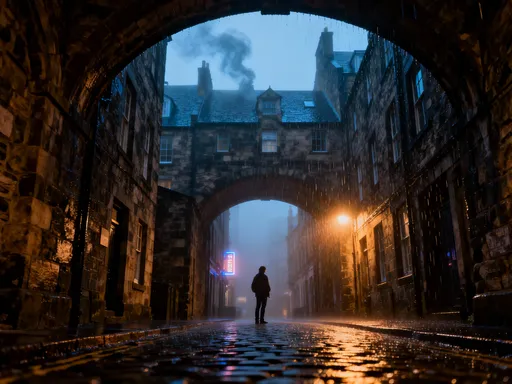
Walking through Edinburgh’s Old Town is like stepping into a three-dimensional history book. The medieval street plan, largely unchanged since the 15th century, follows the natural ridge of the Castle Rock, creating a spine that runs from Edinburgh Castle down to Holyrood Palace. Along this spine lies the Royal Mile, a succession of streets—Castlehill, Lawnmarket, High Street, Canongate—that form the historic heart of the city. But beyond the souvenir shops and bagpipe players, a network of narrow alleyways known as “closes” branches off at sharp angles, leading into hidden courtyards and forgotten tenements.
These closes were not merely passageways; they were the arteries of daily life in early modern Edinburgh. In a city where land was scarce and population dense, buildings grew upward rather than outward. Tenement houses, some rising five or six stories, were constructed directly atop one another, their upper floors jutting over the street below. This vertical expansion created what some historians call “landscapes of overhang,” where entire communities lived stacked like shelves. The result was a vertical city, one where neighbors could shout across gaps between rooftops and children played on flat leads above the bustling lanes.
Two surviving examples of this urban form offer a rare glimpse into how people lived centuries ago. Gladstone’s Land, a restored 17th-century merchant’s house on the Lawnmarket, stands as a testament to the ingenuity of early urban dwellers. Its timber-framed structure, steep staircases, and small-paned windows reflect a time when space was measured in inches. Similarly, Lady Stair’s House, now part of the Writers’ Museum, preserves the elegance and austerity of Georgian-era living within the medieval fabric. Both buildings illustrate how architecture adapted to constraints, turning limitation into innovation.
What makes these structures so compelling is not just their preservation, but their integration into the present. Unlike museum pieces frozen in time, these buildings continue to serve the city—some as residences, others as cultural spaces. This continuity reinforces the idea that history in Edinburgh is not something to be observed from a distance, but something lived within. The Old Town remains a functioning neighborhood, where the past is not reconstructed, but actively remembered.
The Underground Layers: Vaults and Forgotten Foundations
Beneath the bustling streets of Edinburgh lies another world—one of darkness, silence, and forgotten stories. The Blair Street Underground Vaults, nestled beneath the South Bridge, were originally constructed in the late 18th century to support the expanding city above. Designed as storage spaces for goods and services, these 19 arches were meant to house taverns, workshops, and storage for the growing population of the Old Town. But due to poor ventilation and persistent dampness, many of the vaults were abandoned within decades, slipping into obscurity.
Over time, the vaults took on new, often tragic, roles. Some were repurposed as illegal distilleries or makeshift housing for the city’s poorest residents. Others became associated with darker chapters of history—rumors of body snatching, secret societies, and even unsolved crimes have clung to these spaces, adding to their mystique. Today, guided tours offer visitors a chance to walk through select sections, illuminating not just the physical structure but the social conditions that shaped their use. The air is cool and thick, the walls lined with soot-stained brick, and the low ceilings press down like the weight of time itself.
The engineering behind the South Bridge reveals much about Edinburgh’s urban evolution. Built between 1785 and 1788, the bridge was an ambitious solution to connect the Old Town with the emerging New Town across the Cowgate valley. Instead of a simple span, engineers constructed a massive stone viaduct with 19 arches, effectively creating a new level of the city. The spaces beneath were intended as functional, but the city’s rapid growth and shifting economic patterns rendered them obsolete. What was once a feat of Enlightenment-era engineering became a forgotten underbelly.
Preserving these spaces presents unique challenges. Unlike above-ground monuments, the vaults cannot be restored to their original purpose without compromising their authenticity. Conservation efforts focus on stabilizing the structure while maintaining its atmospheric integrity. Ethical tourism plays a key role—operators emphasize historical accuracy over sensationalism, avoiding exaggerated ghost stories in favor of documented social history. Visitors are encouraged to reflect on the lives of those who once inhabited these spaces, not as specters, but as real people navigating poverty, labor, and survival in a rapidly changing city.
New Town’s Classical Whisper: Order Meets Ambition
Just a short walk from the organic chaos of the Old Town lies a world of symmetry, proportion, and rational design—the Edinburgh New Town. Developed in the late 18th and early 19th centuries, this expansion was a direct response to overcrowding and unsanitary conditions in the medieval core. Inspired by Enlightenment ideals, city planners envisioned a modern urban environment rooted in order, hygiene, and aesthetic harmony. The result was one of Europe’s most celebrated examples of Georgian urban planning.
The contrast between Old and New Town is stark, yet intentional. Where the Old Town climbs and twists with the land, the New Town unfolds in a grid of wide, tree-lined avenues. Buildings adhere to strict architectural guidelines—uniform cornice lines, balanced window placements, and restrained ornamentation. The use of cream-colored sandstone gives the district a luminous quality, especially in the soft northern light. The design was not merely aesthetic; it reflected a belief in progress, reason, and the power of environment to shape behavior.
Charlotte Square, designed by Robert Adam, stands as the crown jewel of the New Town. Its symmetrical layout and central garden create a sense of calm and balance, while the surrounding townhouses showcase classical details—columns, pediments, and delicate stonework. Today, many of these homes serve as offices, embassies, or private residences, but their original purpose as elite urban dwellings remains evident. The square exemplifies how architectural order can foster a sense of community and shared identity.
What makes the New Town remarkable is not just its beauty, but its adaptability. While preserving its heritage status as part of a UNESCO World Heritage Site, the district has evolved to meet contemporary needs. Ground floors house cafes, bookshops, and galleries, blending modern life with historic form. Pedestrian-friendly streets encourage walking and social interaction, reinforcing the original vision of a livable, humane city. The success of the New Town lies in its ability to remain both a monument and a living neighborhood.
Hidden Gems Off the Beaten Path: Courtyards and Secret Passages
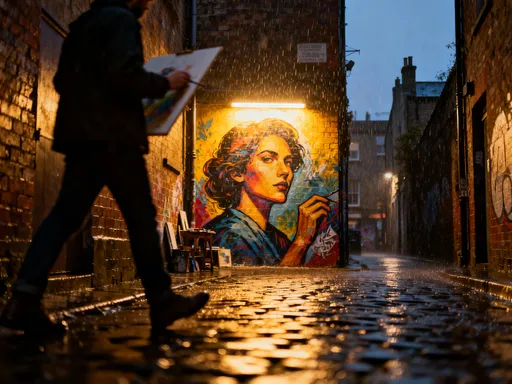
Away from the main tourist routes, Edinburgh reveals its most intimate architectural secrets. These are not grand monuments, but quiet moments of beauty found in overlooked corners—courtyards bathed in morning light, alleyways lined with wrought iron gates, and murals painted on centuries-old stone. One such discovery is Dunbar Court, a narrow passage near the Canongate that opens into a sunlit courtyard adorned with a vibrant mural depicting local history. The artwork, created by community artists, transforms an otherwise ordinary space into a celebration of place and memory.
Another hidden treasure is James Court, tucked behind St Giles’ Cathedral. This secluded square, accessible through a low archway, feels worlds away from the noise of the Royal Mile. Built in the early 18th century, its U-shaped layout surrounds a peaceful garden, offering residents and visitors a rare moment of stillness. The buildings retain their original sash windows and stone carvings, their façades softened by time and ivy. It is a place designed for contemplation, where architecture serves not just function, but well-being.
What unites these hidden spaces is attention to detail. A repurposed doorway turned into a flower planter, a hand-forged gate with intricate scrollwork, a stone plaque marking a forgotten guild—each element contributes to the city’s character. These details are not accidental; they reflect a long-standing tradition of craftsmanship and civic pride. For the observant traveler, they offer a deeper connection to the city, one built not on checklist tourism, but on discovery and presence.
Exploring these lesser-known areas requires a shift in mindset. Rather than following a map or itinerary, it calls for wandering with intention—looking up at rooflines, peering through iron railings, and listening to the echoes in empty courtyards. The reward is not a photo opportunity, but a sense of intimacy with the city. Edinburgh invites this kind of engagement, rewarding curiosity with quiet revelations.
Modern Interventions: When Old Meets New
In a city so deeply rooted in history, the introduction of modern architecture is often met with both excitement and resistance. The challenge lies in balancing innovation with respect for heritage. One of the most significant examples of this tension is the Scottish Parliament building at Holyrood, completed in 2004. Designed by Enric Miralles, the structure is a bold departure from traditional forms, with undulating timber roofs, angular stonework, and a design inspired by the Scottish landscape. Its organic shape and use of natural materials aim to reflect the spirit of democracy and the natural world.
The building sparked intense debate upon completion. Critics argued that its contemporary style clashed with the historic surroundings, particularly the adjacent Holyrood Abbey and Arthur’s Seat. Others praised its originality and symbolic power, seeing it as a statement of modern Scotland’s identity. Over time, public opinion has softened, and the building has become an accepted, even admired, part of the cityscape. Its success lies in its contextual sensitivity—while visually distinct, it echoes the textures and colors of the surrounding geology.
The Parliament is not the only example of thoughtful modern intervention. Throughout the city, architects have embraced adaptive reuse—transforming old warehouses into apartments, converting churches into cultural centers, and integrating sustainable technologies into historic structures. These projects demonstrate that preservation does not mean stagnation. By reimagining old spaces for new uses, Edinburgh continues to evolve without losing its soul.
Public discourse around architecture remains active. Residents care deeply about how their city changes, and community input often shapes development plans. This engagement ensures that new designs consider not just aesthetics, but social impact, accessibility, and environmental sustainability. In a UNESCO World Heritage city, every new building is a negotiation between past and future—a reminder that heritage is not a fixed state, but a living conversation.
Why This Matters: Architecture as Identity
What I discovered in Edinburgh’s hidden corners goes beyond bricks and mortar. The city’s architecture is a living record of its values, struggles, and aspirations. From the cramped tenements of the Old Town to the enlightened symmetry of the New Town, each layer reflects a moment in time when people made choices about how to live together. These buildings are not just shelters; they are expressions of identity, shaped by geography, philosophy, and community.
For visitors, this depth of meaning transforms tourism from sightseeing into understanding. To walk through Edinburgh is to engage with centuries of human ingenuity and resilience. It invites a slower, more reflective way of traveling—one that values observation over consumption, and connection over convenience. The city teaches us that beauty can be found in the overlooked, and history is not confined to museums, but embedded in the streets we walk.
Edinburgh also offers lessons for other historic cities facing growth and change. It shows that preservation and progress are not opposites, but partners. By honoring the past while embracing innovation, cities can remain vibrant and relevant. The key lies in intentionality—designing with respect, building with care, and listening to the voices of those who call the city home.
Traveling deeper means looking up, down, and behind—to truly see a place. It means noticing the curve of a staircase, the pattern of a cobblestone, the way light falls on an ancient wall. In Edinburgh, every hidden corner holds a story. All we need to do is slow down, look closely, and let the city speak.